
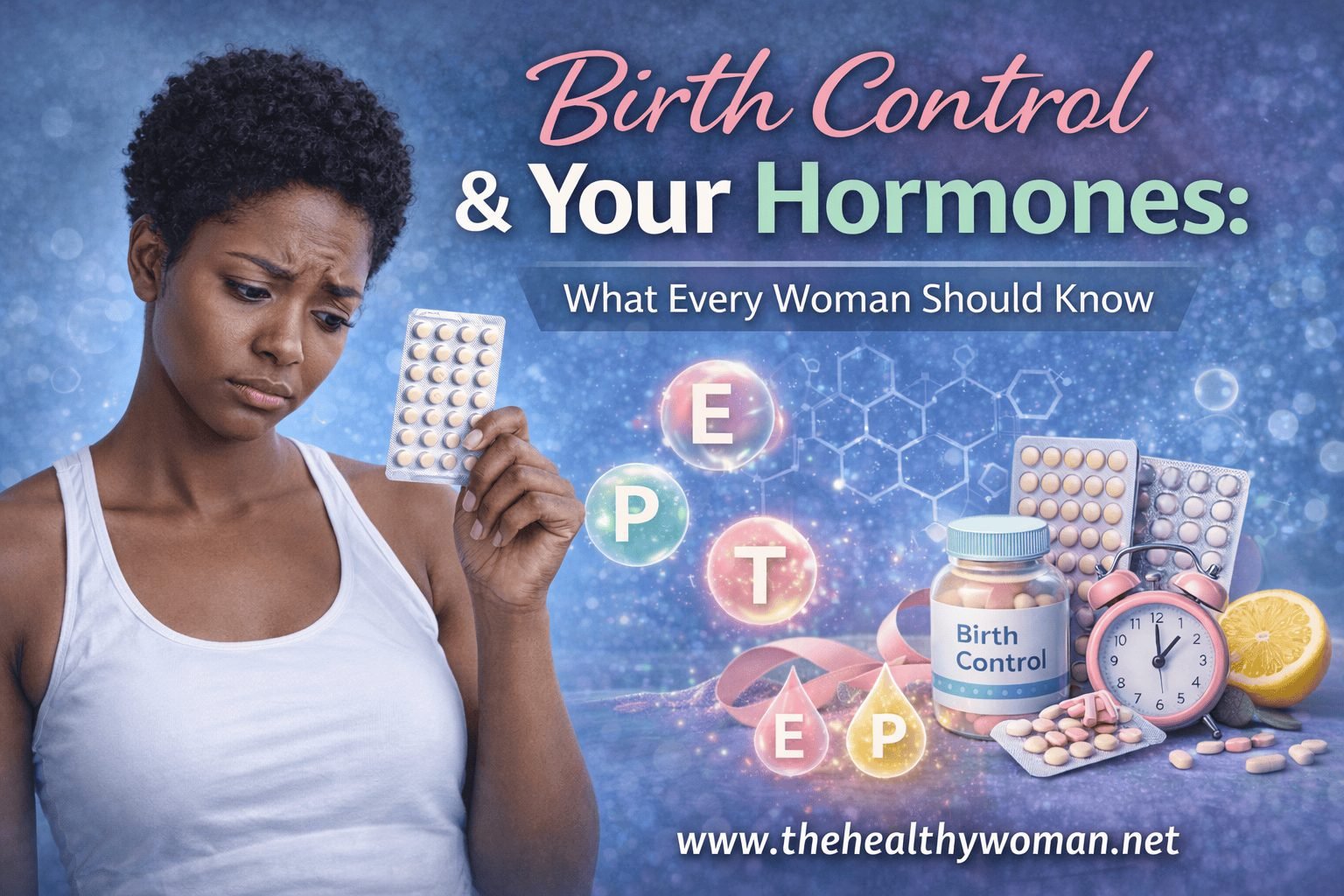
Birth control is one of the most commonly used medications in the world. Millions of women start it in their teens, stay on it for years, and often stop without fully understanding what it actually did inside their bodies.
Many women are told birth control “regulates hormones.”
Others are told it “balances cycles.”
Some are prescribed it for acne, PCOS, painful periods, or heavy bleeding.
However, birth control does not fix hormonal issues. Instead, it overrides your natural hormone cycle.
That difference matters.
This guide breaks everything down in simple language so you can finally understand:
No fear tactics. No confusion. Just clarity.
Hormonal pills contains synthetic versions of estrogen, progesterone, or both.
Instead of supporting your natural cycle, it shuts it down.
Here’s how.
Your brain normally sends signals to your ovaries to mature an egg, trigger ovulation and to produce estrogen and progesterone in a natural rhythm
Birth control interrupts this communication.
It tells your brain:
“You are already pregnant. No need to ovulate.”
As a result, ovulation stops, your ovaries go quiet and natural hormone production drops
This is why the bleed you get on the pill is not a real menstrual period. It is a withdrawal bleed caused by hormone changes in the pill, not a full hormonal cycle.
Estrogen Changes
Synthetic estrogen keeps levels steady instead of allowing natural rises and falls.
This can help symptoms short term. However, it can also, affect liver detox pathways, increase estrogen dominance and impact gut and thyroid function over time
Progesterone Suppression
Your body’s natural progesterone is only made after ovulation.
Since birth control stops ovulation, natural progesterone drops.
Low progesterone can contribute to:
These pills lower free testosterone.
This often explains:
While on birth control your cycles are artificial, ovulation does not hapen and hormone patterns flatten
This is why they can mask underlying issues.
For example, PCOS symptoms may appear “better”, acne may temporarily improve and heavy bleeding may stop
However, the root cause often remains.
When birth control stops, many women suddenly experience:
This is known as post-birth control syndrome, although it is not always labeled as such in medical settings.
Effects on Mood and Mental Health
Hormones and brain chemistry are deeply connected.
Some women feel fine on birth control. Others notice changes quickly.
Common experiences include:
Synthetic hormones influence neurotransmitters like serotonin and dopamine. Because of this, mental health responses vary from woman to woman.
If your mood changed after starting the pill, that experience is valid and real.
Birth Control and Gut Health
This part is rarely discussed but extremely important.
Birth control affects the gut in several ways, It alters gut bacteria balance, increases intestinal permeability it also affects nutrient absorption
Long-term use has been linked to lower levels of:
These nutrients matter for hormone balance, energy, digestion and skin health
When gut health suffers, hormones struggle to rebalance later.
Birth control does not permanently damage fertility for most women.
However, it can delay the return of ovulation.
After stopping birth control: some women ovulate within weeks, others take months to cycle normally and some women uncover underlying hormone issues
This delay often reflects nutrient depletion, suppressed ovarian signaling and stress on detox systems
Supporting the body during this transition makes a big difference.
Long-Term Effects to Be Aware Of
Long-term hormonal birth control use has been associated with nutrient deficiencies, estrogen metabolism challenges, gut imbalance, thyroid interference and blood sugar changes in some women
This does not mean birth control is “bad.” It means it should be used with awareness and support, not as a lifelong default.
When birth control stops, your body must restart communication between brain, ovaries, adrenal glands and thyroid This process takes time.
Common experiences include delayed periods, acne, mood shifts, fatigue, digestive changes
Your body is not broken. It is recalibrating.
Supporting this transition helps cycles return faster and more smoothly.
1. Support Nutrient Replenishment
Focus on nutrients commonly depleted:
This is where quality supplementation helps fill gaps food alone may not cover.
2. Support Liver Detox
Your liver processes hormones.
Supporting liver pathways helps:
3. Support Gut Health
Healthy gut bacteria help eliminate used hormones.
Fiber, hydration, and gut-supportive habits matter more than most women realize.
4. Reduce Stress
Stress blocks hormone recovery.
Gentle routines, sleep, and nervous system support help hormones rebalance faster.
Understanding birth control removes confusion and self-blame.
If your body changed, it was not weakness, if symptoms appeared, they were signals and if you feel different now, that awareness is power.
Hormones respond best to informed care.
Birth control can be useful. It can be necessary. It can also come with trade-offs.
The key is informed choice, not blind use.
When women understand how birth control affects their hormones, they can:
Your body is intelligent, and your hormones are responsive. And with the right support, balance is possible.